

Current Weather Conditions
Our weather widget displays live temperature readings for two key elevations:
-
Ganhaizi Meadow (甘海子) - 3,000m: Base area where most tours start, cable car station, and visitor center
-
Glacier Park (冰川公园) - 4,506m: Highest accessible point via cable car, typically 10°C colder than base


Best Time to Visit
The best weather is during the dry season from November to April:
-
Nov-Apr (Dry): Clear skies, excellent visibility. Temps: 5°C to 15°C at base, -5°C to 5°C at Glacier Park.
-
May-Oct (Rainy): More clouds, frequent afternoon rain. Temps: 10°C to 20°C at base, 0°C to 10°C at summit.


Sunrise & Sunset Times
Times are terrain-adjusted for Ganhaizi:
Best photography: Golden hour from sunrise to 8:00 AM, and 4:00 PM to sunset.


What to Wear & Bring
Essential Items:
✅ Warm jacket/down coat - Required year-round
✅ Layers - 10°C difference between base and summit
✅ Gloves and warm hat - Essential for Glacier Park
✅ Sunglasses - Strong UV at high altitude
✅ Sunscreen SPF 30+
✅ Comfortable hiking shoes
✅ Water bottle
✅ Oxygen canister - Available if needed

Important Considerations
-
Check forecast - Cable cars may close in bad weather
-
Glacier Park is 8-12°C colder than base (1,500m higher)
-
Mornings clearest; clouds build by afternoon
-
Altitude sickness possible at 4,506m - take it slow
-
Winter (Nov-Feb): Snow and ice possible

Understanding the Forecast
-
Hourly (6 AM - 6 PM): Temperature at 3-hour intervals
-
7-Day Outlook: Extended forecast
-
Icons: ☀️ Sunny | 🌤️ Partly Cloudy | ⛅ Cloudy | 🌧️ Rain | 🌨️ Snow | ⛈️ Storm
Aether Tours
Private day tours from Lijiang Old Town:
✅ Private vehicle with driver
✅ Hotel pickup/drop-off
✅ Flexible itinerary
✅ Optional English-speaking guide
✅ Cable car tickets included
✅ Impression Lijiang Performance (optional)
✅ Scenic Sightseeing Train Ride (optional)
✅ Watch Golden Sunrise (weather permitting)
Jade Dragon Snow Mountain Live Weather
Jade Dragon Snow Mountain sits at the edge of the Tibetan Plateau, and its weather reflects that — dramatic, changeable, and very different from the lowland cities most visitors have just come from.
A few things to understand before diving into the months:
-
Lijiang city (2,400m) and the mountain are two different climates. A warm sunny day in town can mean cold, cloudy conditions up at the glacier. Always prepare for colder weather than Lijiang suggests.
-
Altitude magnifies everything. UV radiation is intense year-round, wind chill at the glacier is significant even in summer, and conditions can shift quickly.
-
Afternoon clouds are common in summer. The mountain often generates its own weather — clear mornings giving way to cloud or rain by early afternoon. Visiting earlier in the day gives you the best chance of clear views.
-
The summit is always snow-capped. Even in the height of summer, the upper peaks are permanently white. That's part of what makes it beautiful year-round.
What Makes Jade Dragon Snow Mountain Weather Unique
The Four Seasons
Spring
March-May
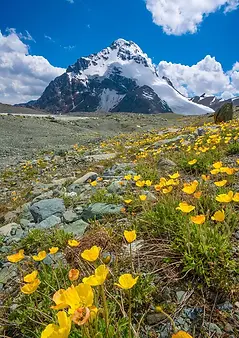
The contrast between flowers and snow-capped mountains makes it a great time for hiking.
Autumn
September-November
The most stable climate, and the best time to see the "golden mountains illuminated by the sun.

Summer
June-August
A summer resort; although there is a lot of rain, the swirling clouds create a fairyland-like atmosphere.

Winter
December-February
The snow cover is thickest, and the snow scenery is the most spectacular, but it is also the coldest time.

Month-by-Month Weather Guide
January
Temperature (Lijiang): 3°C – 14°C
At the glacier: -8°C to -2°C
Rainfall: Very low
Crowds: Low
January is cold, clear, and quiet. The mountain is at its most pristine — heavy snow on the peaks, crisp air, and far fewer tourists than any other time of year. Blue Moon Valley's colours remain vivid even in winter, contrasting beautifully against the white mountain backdrop. Dress warmly (think down jacket, gloves, layers) and you'll have an experience most travelers never see. Cablecar tickets are easy to obtain.
February
Temperature (Lijiang): 5°C – 15°C
At the glacier: -6°C to 0°C
Rainfall: Very low
Crowds: Low to moderate (Chinese New Year brings a surge — check dates)
Similar to January; cold, clear, and uncrowded outside of Chinese New Year. If your trip coincides with the Spring Festival holiday (dates vary each year, typically late January to end-February), expect a significant increase in domestic tourists and book cablecar tickets well in advance. Outside of that window, February is an excellent time to visit.
March
Temperature (Lijiang): 8°C – 18°C
At the glacier: -4°C to 2°C
Rainfall: Low
Crowds: Moderate, increasing toward end of month
Spring begins to arrive in Lijiang in March, and the mountain follows. Rhododendrons start to bloom on the lower slopes toward the end of the month, adding splashes of pink and red against the snow. Temperatures are still cool but increasingly comfortable, and crowds haven't yet reached peak levels. A good time to visit if you can.
April
Temperature (Lijiang): 12°C – 22°C
At the glacier: 0°C to 5°C
Rainfall: Low to moderate
Crowds: High — peak season begins
April is one of the most popular months to visit, and for good reason. The rhododendron bloom is at its peak, the skies are generally clear, temperatures in Lijiang are pleasant, and the mountain is at its most photogenic. It's also when cablecar quotas start to fill up meaningfully. Book your glacier cablecar at least 5–7 days ahead, and earlier if your trip falls around the Qingming Festival (early April).
May
Temperature (Lijiang): 15°C – 24°C
At the glacier: 2°C to 8°C
Rainfall: Moderate
Crowds: High — Very High during May Golden Week (1–5 May)
May is beautiful but busy. The Golden Week public holiday (1–5 May) brings enormous crowds from across China — cablear tickets can sell out weeks in advance during this period. If you're visiting during Golden Week, book as early as possible. Outside of the holiday, late May is a lovely time: warm, green, and generally clear in the mornings.
June
Temperature (Lijiang): 17°C – 24°C
At the glacier: 4°C to 10°C
Rainfall: Moderate to high — monsoon begins
Crowds: Moderate to high
The monsoon season begins in June, bringing more frequent cloud and afternoon rain. Mornings are typically clearer — plan to arrive at the mountain early to maximise your chance of good visibility at the glacier. The meadows and lower zones are lush and deeply green. Blue Moon Valley can be particularly vivid. Bring a light rain layer.
July
Temperature (Lijiang): 18°C – 25°C
At the glacier: 5°C to 12°C
Rainfall: High
Crowds: High
Summer in Lijiang is warm and green, but rain is frequent. Afternoon cloud is almost guaranteed, often obscuring the glacier and upper peaks. The best strategy is to visit the glacier first thing in the morning, then move to Blue Moon Valley or the meadows in the afternoon when cloud is less of a concern for those experiences. Pack a waterproof layer. Despite the rain, July remains popular — book ahead.
August
Temperature (Lijiang): 17°C – 24°C
At the glacier: 5°C to 11°C
Rainfall: High
Crowds: High
Similar to July — warm, green, and frequently cloudy in the afternoon. The mountain vegetation is at its most lush, and wildflowers are abundant in the meadows. Rain is a regular feature but usually comes in short, heavy bursts rather than all-day downpours. Visit early, dress in layers, and keep expectations realistic for glacier visibility.
September
Temperature (Lijiang): 15°C – 22°C
At the glacier: 2°C to 8°C
Rainfall: Moderate, decreasing toward end of month
Crowds: Moderate to high
September marks the beginning of the end of monsoon season, and the mountain starts to clear. By late September, conditions are approaching their best of the year — clear skies, comfortable temperatures, golden light, and the first hints of autumn colour on the lower slopes. One of the best months to visit overall.
October
Temperature (Lijiang): 12°C – 20°C
At the glacier: -1°C to 5°C
Rainfall: Low
Crowds: High — Very High during National Day Golden Week (1–7 October)
October is arguably the best month to visit Jade Dragon Snow Mountain — clear skies, cool air, stunning autumn colours, and excellent visibility at the glacier. The catch: National Day Golden Week (1–7 October) is the busiest travel period in China. Cablecar tickets sell out weeks in advance. If you're visiting during Golden Week, book as early as possible. Outside of the holiday, mid-to-late October is quieter and absolutely beautiful.
November
Temperature (Lijiang): 7°C – 17°C
At the glacier: -5°C to 0°C
Rainfall: Very low
Crowds: Low
November is one of the hidden gems of the Jade Dragon Snow Mountain calendar. The Golden Week crowds have cleared, the air is dry and crystal clear, autumn colours linger on the lower slopes, and cablecar tickets are easy to obtain. Temperatures are getting cold — particularly at the glacier — but it's very manageable with the right clothing. Highly recommended for those with flexible travel dates.
December
Temperature (Lijiang): 4°C – 14°C
At the glacier: -8°C to -3°C
Rainfall: Very low
Crowds: Low
Cold, quiet, and strikingly beautiful. December sees some of the clearest skies of the year and the mountain is often blanketed in fresh snow. Visitor numbers are low, which means no queues and easy ticket access. The cold at the glacier is real — dress accordingly — but the winter silence and pristine conditions make it a memorable experience. One of our favourite times to visit.
Snow Mountain Elevation

-
Jade Dragon Snow Mountain has a large altitude range; please be aware of the temperature differences.